
SPOTLIGHT: An Interview with Deb Kinghorn
Deb Kinghorn is a Master Teacher of Lessac Kinesensics, and Professor in the Theatre and Dance Department at the University of New Hampshire. She worked closely with Arthur Lessac over several decades, and most especially during his final years, when she co-authored, Essential Lessac, with him. She teaches Lessac work internationally and stays active as an actor, director, and voice and dialect coach. (Read more)
SPOTLIGHT: An Interview with Deb Kinghorn
Deb Kinghorn is a Master Teacher of Lessac Kinesensics, and Professor in the Theatre and Dance Department at the University of New Hampshire. She worked closely with Arthur Lessac over several decades, and most especially during his final years, when she co-authored, Essential Lessac, with him. She teaches Lessac work internationally and stays active as an actor, director, and voice and dialect coach.

Deb Kinghorn and Arthur Lessac 2009
How did you first get involved with Lessac Kinesensics? What first piqued your interest?
I first learned of Lessac work in 1973 at the State University of New York, Fredonia. My teachers had just attended an 8-week workshop and began teaching the work in our classes. I immediately fell in love with it. I had been doing another kind of vocal training that involved mostly rote repetition and imitation, and when I began learning Lessac work, I was full of wonder at how imaginative it was. I also studied voice in England—some completely different systems there, and then in graduate school, the program interwove Lessac and Linklater work into their training.
Then I began working as a professor, teaching classes, and realized very soon that I didn’t know enough. So I attended my first Lessac intensive in 1984, ten years after I was first introduced to the work. I saw a flier, got a scholarship, and attended the 6-week workshop. I was in nirvana! I knew the vocal work pretty well, but the body work was a revelation. I thought, oh, my God, how could I ever have taught without this! So there were two “AHA!” moments—the introduction in 1973 and the reintroduction in 1984, when I met Arthur.
Arthur and I completely hit it off. In the way we talked and thought about things, our energies complemented each other. It was so easy to talk to him. The next year Arthur asked me to teach a workshop with him, which was for nominees of the Irene Ryan Acting Competition, part of what was known then as ACTF (the American College Theatre Festival). The workshop was six days long, and I took over for Arthur after the first three days. It was during those first three days that we discussed the many different applications of the work. I was too young at the time to realize what they could mean. But there were cross-cultural applications, health and wellness applications, and so many others…it was fascinating to see how Arthur pulled so many aspects of life and living together into the work. It all intrigued him. I listened, but it didn’t really click until later, as I was just interested in the teaching aspect.
What stories stand out in your mind about working with Arthur Lessac?
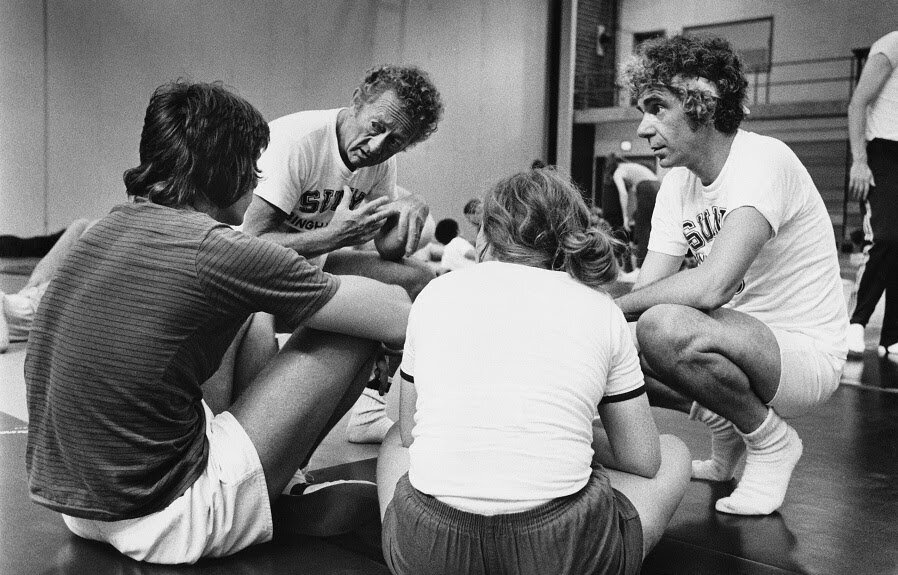
He was so vital, so full of life, so full of energy, and he was extremely thoughtful. He was also a very smart man. He was always a courageous man, although he didn’t think of himself that way—he was willing to go the distance to fight for what he believed in, and always allowed people to be themselves within his voice and body work.
He was passionate about the work and its efficacy. Around 2007, we had a long conversation that was a memorable one for me, about 5 hours, concerning his research. He wanted very much for people to do more to expand his work—he always felt like there was more: he’d say, “I wish for the growth of our work.” He called his work “pre-scientific,” and admitted he was not a scientist, but he did a tremendous amount of research. Theatre is a laboratory. He was his own laboratory. He always tested the work on himself, living it, embodying it, using it in every single thing that he did. But I remember that he never looked at himself as a researcher—never connected all of the thousands of hours of classes and experimentation with the work of a researcher, but that’s what he was.
I truly loved Arthur’s willingness to discuss things, to hear all kinds of different ways of working. He wasn’t protective about the work. He was very clear about it and would listen to anything, believing that healthy disagreements were okay. But in the end, he would ask, “Is it organic? How does this exploration compare or contrast?” And he would always go back to honoring the organic principles of the work.
How has Lessac work evolved over the years?

The work has evolved in terms of being more open, less rigid. During the last weeks of his life, Arthur wanted to make sure the work would evolve, and not just for actors. That always stayed with me—don’t let the work stagnate. He gave everyone that gift. He’d say, “You have the creative potential, the bones, whatever, to go further.” His amazing generosity is what I’ll remember. He always talked about kinesensics as our work. The teacher/student relationship has changed. That is a significant evolution of the work—you, the student, are in charge. I am a guide. You tune in to what this feels like in you. Give it your own name, if you wish. You own it. Arthur felt that any evolution must cut across cultures. It comes back to being a human being, subject to gravity. As the work evolves slowly over time, in my teaching, I ask myself, can I take one step back? Am I parroting what I have learned from someone else or is there a previous step that I’m leaving out? We benefit from looking both backward and forward.
Teaching this work involves so much more than a syllabus. I see people embracing the holistic nature of the work as they recognize that individuals matter. That’s another way that the work has evolved—the pedagogy and how we address one another, becoming more and more inclusive in our teaching. Whether we’re in Brazil, South Africa, or Croatia, Lessac work is respectful of cultural identity.
Take something fundamental to kinesensic work: the y-buzz. This involves using a phoneme that doesn’t exist in many languages (the Y consonant), but if you can find the comparable sound in the other language, you can get the same feeling, which is central to our work: the feeling modality, and from that you can teach (a differently named version of) the y-buzz. In other vocal training you hear a lot about the “placement” of sound in the mask area. Do all languages do that? It’s a big question in voice communities—is that a Western concept that’s not necessarily true for all languages? With placement, or any single concept, the terms don’t seem to apply across cultures. But when sound is produced on the vocal folds, vibrations occur in the bones of the head, while placement differs. But the human truth is that bones vibrate—that’s the bottom line, inescapable.
The voice is so much more than resonance and articulation. Arthur’s work has to do with the development of the whole human being. There was a point in time when the idea of the individual Voice became clear in my mind. The Voice becomes the manifestation of all that we are, and can have a significant impact on the world around us. We may begin with the Consonant Orchestra, yes, but the Voice evolves as we experience ourselves, our individuality, and our humanness. On a microscopic level, atom-to-atom, a Lessac trainer plants a seed and lets it grow. Our job as trainers is to nurture those seeds in each other. That’s the legacy that Arthur wanted us to pass on. We are responsible for the fruitfulness of each other. It’s a powerful message that I carry with me always and underscores everything I do for and with the Institute. Seeds don’t grow quickly. Some don’t germinate. The work we do isn’t something we can manufacture or project automatically. But with careful nurturing, if we water growth, we know we’ll see people wanting to be a part of this Institute. They see that they can be themselves with us, and that they have a valuable Voice.
More from this interview with Master Teacher Deb Kinghorn will appear in the Spring/Summer 2020 LTRI Newsletter.

THE LESSAC INTERNATIONAL CONFERENCE, JANUARY 2020
Our readers are cordially invited to attend the 2020 Lessac Training and Research Institute ® International Conference, which will be held January 9-11, 2020, at Kent State University in Ohio. The conference is for anyone interested in improving the quality of their voice and body communications, and the work can be applied to any life endeavor. (Read more)
THE LESSAC INTERNATIONAL CONFERENCE, JANUARY 2020

Our readers are cordially invited to attend the 2020 Lessac Training and Research Institute ® International Conference, which will be held January 9-11, 2020, at Kent State University in Ohio. The conference is for anyone interested in improving the quality of their voice and body communications, and the work can be applied to any life endeavor. The theme of the conference is: “Reflect and Renew: Lifting Voices to Affect Positive Change,” as we celebrate the power of the human instrument as a conduit for grounded, positive, and peaceful communication. Conference participants will have the opportunity to engage in a wide variety of dynamic, experiential workshops, paper presentations, and panel conversations. Workshops will explore how Lessac energies intersect with various acting techniques, such as Shin Somatics movement, the neuroscience of emotions, and Viola Spolin’s improvisation work, to name a few. One panel discussion will cover how Kinesensics may be used with women in pregnancy, labor, delivery, post-partum, and beyond, to both empower and support them. Among the paper presentations is one that will examine how and why Lessac body energies prepare actors for film, television, and voice-over success. You’ll be given the chance to experience basic lessons in kinesensic energies and principles. The conference environment is also ripe for forging and developing new professional and personal connections.
What presenters are saying about the conference:
Robin Aronson
Certified Trainer
Immediate-Past President, LTRI
“I am really looking forward to the upcoming 2020 Conference at Kent State. During the conference, I will be co-presenting with my dance colleague, Kelly Ferris Lester from Southern Miss. Our workshop will be exploring the commonalities of Shin Somatics movement work and Lessac Kinsesensic training to enhance and deepen creative expression. In addition to presenting, I also am excited to see others share their current research practices. The Lessac conference is such a lovely way to meet new people interested in the work as well as spending time with Lessac Master Teachers, friends and colleagues. I sincerely hope you will consider attending!”
-Robin Aronson, Immediate Past President LTRI
"The Lessac Conferences have been a font of information for me through the years. Every time I go I pick up valuable Lessac-inspired applications that I have immediately put into use in my direction, classroom, and coaching. The value of this conference cannot be beat; and the intimate, generous community of players in the Lessac world continues to nourish and support anyone interested in any aspect of this holistic training. I want to personally reach out and encourage anyone curious about the work to contact me if you have questions about whether this conference would be right for you to attend this year. crystal.robbins@lessacinstitute.org"
-Crystal Robbins, Master Teacher LRTI
More about the conference:
Kent State University’s School of Theatre and Dance is, in part, hosting the 2020 conference. 2020 marks the 50th year since the tragic events that took place on May 4, 1970 at Kent State University. The university has arranged a variety of special commemorative events available to the public between through May 4, 2020. For more information on the scheduled events, special programs, and educational opportunities, please visit the 50th Commemoration website.

Click here for more information about the conference and registration, please see our website:

ON LESSAC KINESENSICS
What is Lessac Kinesensic Training? A comprehensive, creative, and holistic work aimed at the development of voice and body strength, agility, and expressiveness. Finding the unique and tension-free expression of yourself is what Kinesensics is all about. (Read more)
ON LESSAC KINESENSICS

What is Lessac Kinesensic Training? A comprehensive, creative, and holistic work aimed at the development of voice and body strength, agility, and expressiveness. Finding the unique and tension-free expression of yourself is what Kinesensics is all about. Building on ancient wisdom, backed by modern science, Kinesensics encourages you to use the simple but natural behaviors of your body, such as yawning or humming, as organic instructions towards improved physical and vocal expression and health. Each simple step builds on the previous one, creating a concrete pathway to success. No matter what your line of work, Kinesensics can help you overcome obstacles and release stress and strain to be your authentic self.

Where may I apply the principles of Kinesensics?
Whenever you speak or move, Kinesensics will work for you. Arthur Lessac believed that a little change of mind is all that’s needed to remind us that when we speak, we are singing, and when we walk, we are dancing. We find specific applications of the Work in all of life’s endeavors, from the boardroom to the classroom to the parent reading a child a bedtime story. But the following areas represent ways the work is being used today:
Communication (speech, public speaking, speech language pathology)
Socio-Culture and Language (ESL, second language acquisition, accent acquisition, multi-lingualism)
Education (applied theatre, theatre education, voice & movement development for all ages)
Performance (singing, acting, movement/dance)
Health and wellness (fitness, aging, vitality, self-realization, optimal health)
“So let me invite you into a comprehensive and most accessible … lab, where voice and body training are really communication and language training; where development and exercise, feeling and perception become ‘body wisdom’; and where you learn to deal uniquely with the exploration of originality, not as the discovery of another novelty but as the re-discovery of origin itself…within you.”
Arthur Lessac, from The Use and Training of the Human Voice

Lessac work “is real therapy for voice and body. The more you do it, the better you feel. It’s a boon to anyone: actor, public speaker, singer, vocally impaired, private citizen. Once learned it never deserts you. It’s simple to maintain and only strengthens the voice as you grow older. It’s always there…”
—Frank Langella