
Buoyancy and Emotion Regulation
Buoyancy Energy is in our muscle memory—it’s that set of familiar sensations you feel when floating: a weightless, effortless ease. You can feel it in a body of water, after a great massage, walking in mist or a lovely snowfall, or perhaps you’ve had the experience of receiving wonderful news that causes you to feel like you’re floating on air. When buoyant, your body feels relaxed and oxygen-charged, so that your movements are smooth, easy, and fluid.
Buoyancy and Emotion Regulation
by Dana Smith, Ph.D.

The ability to regulate your own emotions is one of the defining characteristics of emotional intelligence. In today’s world of pandemic, social upheaval, political division, and struggles with mental health, emotional intelligence is perhaps more important than ever. Neuroscientific laboratory experiments conducted during the past thirty years have proven that some degree of emotion regulation is possible through consciously employed physical strategies. A growing amount of evidence suggests that if you can assume the breathing pattern, facial expression, and body attitude of a desired emotion (the Emotional Effector Patterns), you can actually begin to feel that emotion.
For the past seven years, I’ve been researching Lessac Body Energies for their potential in regulating emotion. Those of us who practice Lessac Kinesensics can testify that this work offers many powerful tools for coping with the stresses of the day, and one of the most effective tools is Buoyancy Energy. Buoyancy is one of the four natural human body climates in Lessac work, which may be harnessed at any time to enhance any human activity.
Buoyancy Energy is in our muscle memory—it’s that set of familiar sensations you feel when floating: a weightless, effortless ease. You can feel it in a body of water, after a great massage, walking in mist or a lovely snowfall, or perhaps you’ve had the experience of receiving wonderful news that causes you to feel like you’re floating on air. When buoyant, your body feels relaxed and oxygen-charged, so that your movements are smooth, easy, and fluid.
Buoyancy Energy can calm the spirit and promote a feeling of well-being. There’s a physiological reason for that. Explorations in Buoyancy can inspire some elements of an Emotional Effector Pattern, one of six core emotions identified by Chilean neuroscientists in the 1970s. Although feelings are highly subjective and words are insufficient, the general category of emotion I experience most often when working in Buoyancy is the feeling of tenderness or tender love. Others have called it: serenity, affection, peace, and calm contentment. Whatever you call it, this emotion (like the other five core emotions) can be induced through physical means.

I’ve observed that the Emotional Effector Pattern for tender love happens naturally when I move my body buoyantly, as if I were floating. In this pattern, breathing is through the nose. The exhalation is just a beat or count longer than the inhalation. After you exhale, there’s a slight pause or rest before the next inhale begins. Laboratory studies have proven that this breathing pattern lowers the heart rate, blood pressure, and other physiological markers, as well as slowing the release of stress hormones.
One Buoyancy exploration we frequently turn to in Lessac work is called, “wafting and waving”; while standing with shoulder-distance between your feet, you allow your torso to slide (waft) right and left and back again, over and over, in an easy flowing rhythm. Shoulders and hips move together, side to side. This action encourages the tilting of the head to one side—another element of the Effector Pattern for tenderness. You can enhance the experience of wafting and waving into tender love by relaxing your face into a closed-mouth smile, as tiny facial muscles around the mouth and eyes yawn toward the ears. The muscles in the cheeks also move up and back. A final conscious adjustment would involve the slight curling of the rib cage with the head tilt. The whole body is relaxed and open.
Emotion regulation doesn’t mean that you shouldn’t feel what you feel; there is a rightful place for all emotions in our lives. But if you find yourself getting stuck in an unwanted emotion, and are looking for ways to cope, Buoyancy Energy offers a way through. In Essential Lessac, Master Teacher Deb Kinghorn proposes something she calls, “love energy”: “the pervasive sensation of well-being so thoroughly fills experience that it becomes a concrete physical sensation, perhaps not unlike flow or being in the zone.” To me, this sounds like Buoyancy, coupled with the Emotional Effector Pattern for tenderness or tender love.
The world can be a scary place. We pay a price for holding onto conflict and tension, and the cost is to the human bodymind. Feeling anxious? Stuck in traffic or in a long and slowly moving line at the end of the day? Or do you find yourself exhausted by people who are stressed and angry? I recommend a little Buoyancy.

Dana Smith, Ph.D.
Newsletter Editor, LTRI, Lessac Certified Trainer
Professor, Chair of Theatre, Truman State University

SPOTLIGHT: An Interview with Deb Kinghorn
Deb Kinghorn is a Master Teacher of Lessac Kinesensics, and Professor in the Theatre and Dance Department at the University of New Hampshire. She worked closely with Arthur Lessac over several decades, and most especially during his final years, when she co-authored, Essential Lessac, with him. She teaches Lessac work internationally and stays active as an actor, director, and voice and dialect coach. (Read more)
SPOTLIGHT: An Interview with Deb Kinghorn
Deb Kinghorn is a Master Teacher of Lessac Kinesensics, and Professor in the Theatre and Dance Department at the University of New Hampshire. She worked closely with Arthur Lessac over several decades, and most especially during his final years, when she co-authored, Essential Lessac, with him. She teaches Lessac work internationally and stays active as an actor, director, and voice and dialect coach.

Deb Kinghorn and Arthur Lessac 2009
How did you first get involved with Lessac Kinesensics? What first piqued your interest?
I first learned of Lessac work in 1973 at the State University of New York, Fredonia. My teachers had just attended an 8-week workshop and began teaching the work in our classes. I immediately fell in love with it. I had been doing another kind of vocal training that involved mostly rote repetition and imitation, and when I began learning Lessac work, I was full of wonder at how imaginative it was. I also studied voice in England—some completely different systems there, and then in graduate school, the program interwove Lessac and Linklater work into their training.
Then I began working as a professor, teaching classes, and realized very soon that I didn’t know enough. So I attended my first Lessac intensive in 1984, ten years after I was first introduced to the work. I saw a flier, got a scholarship, and attended the 6-week workshop. I was in nirvana! I knew the vocal work pretty well, but the body work was a revelation. I thought, oh, my God, how could I ever have taught without this! So there were two “AHA!” moments—the introduction in 1973 and the reintroduction in 1984, when I met Arthur.
Arthur and I completely hit it off. In the way we talked and thought about things, our energies complemented each other. It was so easy to talk to him. The next year Arthur asked me to teach a workshop with him, which was for nominees of the Irene Ryan Acting Competition, part of what was known then as ACTF (the American College Theatre Festival). The workshop was six days long, and I took over for Arthur after the first three days. It was during those first three days that we discussed the many different applications of the work. I was too young at the time to realize what they could mean. But there were cross-cultural applications, health and wellness applications, and so many others…it was fascinating to see how Arthur pulled so many aspects of life and living together into the work. It all intrigued him. I listened, but it didn’t really click until later, as I was just interested in the teaching aspect.
What stories stand out in your mind about working with Arthur Lessac?
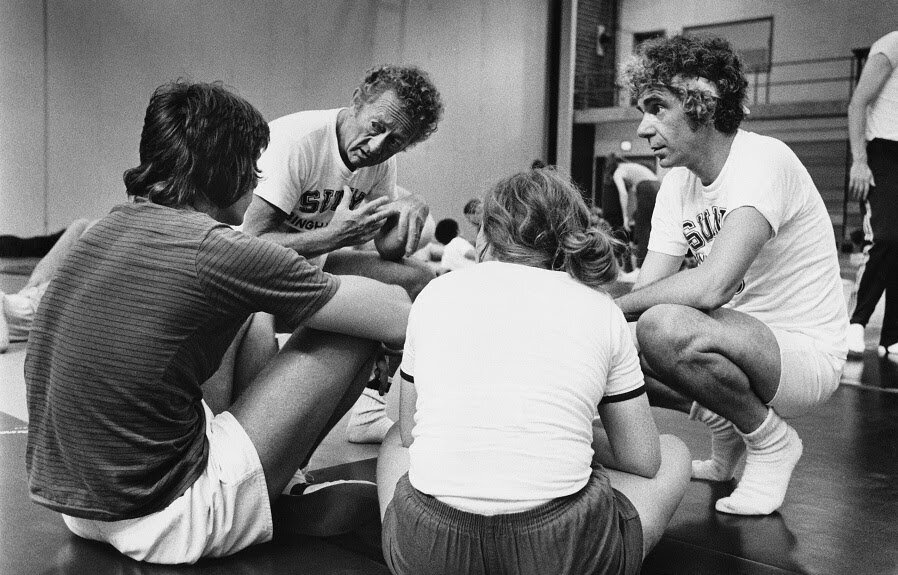
He was so vital, so full of life, so full of energy, and he was extremely thoughtful. He was also a very smart man. He was always a courageous man, although he didn’t think of himself that way—he was willing to go the distance to fight for what he believed in, and always allowed people to be themselves within his voice and body work.
He was passionate about the work and its efficacy. Around 2007, we had a long conversation that was a memorable one for me, about 5 hours, concerning his research. He wanted very much for people to do more to expand his work—he always felt like there was more: he’d say, “I wish for the growth of our work.” He called his work “pre-scientific,” and admitted he was not a scientist, but he did a tremendous amount of research. Theatre is a laboratory. He was his own laboratory. He always tested the work on himself, living it, embodying it, using it in every single thing that he did. But I remember that he never looked at himself as a researcher—never connected all of the thousands of hours of classes and experimentation with the work of a researcher, but that’s what he was.
I truly loved Arthur’s willingness to discuss things, to hear all kinds of different ways of working. He wasn’t protective about the work. He was very clear about it and would listen to anything, believing that healthy disagreements were okay. But in the end, he would ask, “Is it organic? How does this exploration compare or contrast?” And he would always go back to honoring the organic principles of the work.
How has Lessac work evolved over the years?

The work has evolved in terms of being more open, less rigid. During the last weeks of his life, Arthur wanted to make sure the work would evolve, and not just for actors. That always stayed with me—don’t let the work stagnate. He gave everyone that gift. He’d say, “You have the creative potential, the bones, whatever, to go further.” His amazing generosity is what I’ll remember. He always talked about kinesensics as our work. The teacher/student relationship has changed. That is a significant evolution of the work—you, the student, are in charge. I am a guide. You tune in to what this feels like in you. Give it your own name, if you wish. You own it. Arthur felt that any evolution must cut across cultures. It comes back to being a human being, subject to gravity. As the work evolves slowly over time, in my teaching, I ask myself, can I take one step back? Am I parroting what I have learned from someone else or is there a previous step that I’m leaving out? We benefit from looking both backward and forward.
Teaching this work involves so much more than a syllabus. I see people embracing the holistic nature of the work as they recognize that individuals matter. That’s another way that the work has evolved—the pedagogy and how we address one another, becoming more and more inclusive in our teaching. Whether we’re in Brazil, South Africa, or Croatia, Lessac work is respectful of cultural identity.
Take something fundamental to kinesensic work: the y-buzz. This involves using a phoneme that doesn’t exist in many languages (the Y consonant), but if you can find the comparable sound in the other language, you can get the same feeling, which is central to our work: the feeling modality, and from that you can teach (a differently named version of) the y-buzz. In other vocal training you hear a lot about the “placement” of sound in the mask area. Do all languages do that? It’s a big question in voice communities—is that a Western concept that’s not necessarily true for all languages? With placement, or any single concept, the terms don’t seem to apply across cultures. But when sound is produced on the vocal folds, vibrations occur in the bones of the head, while placement differs. But the human truth is that bones vibrate—that’s the bottom line, inescapable.
The voice is so much more than resonance and articulation. Arthur’s work has to do with the development of the whole human being. There was a point in time when the idea of the individual Voice became clear in my mind. The Voice becomes the manifestation of all that we are, and can have a significant impact on the world around us. We may begin with the Consonant Orchestra, yes, but the Voice evolves as we experience ourselves, our individuality, and our humanness. On a microscopic level, atom-to-atom, a Lessac trainer plants a seed and lets it grow. Our job as trainers is to nurture those seeds in each other. That’s the legacy that Arthur wanted us to pass on. We are responsible for the fruitfulness of each other. It’s a powerful message that I carry with me always and underscores everything I do for and with the Institute. Seeds don’t grow quickly. Some don’t germinate. The work we do isn’t something we can manufacture or project automatically. But with careful nurturing, if we water growth, we know we’ll see people wanting to be a part of this Institute. They see that they can be themselves with us, and that they have a valuable Voice.
More from this interview with Master Teacher Deb Kinghorn will appear in the Spring/Summer 2020 LTRI Newsletter.