USING LESSAC KINESENSICS WITH SINGERS
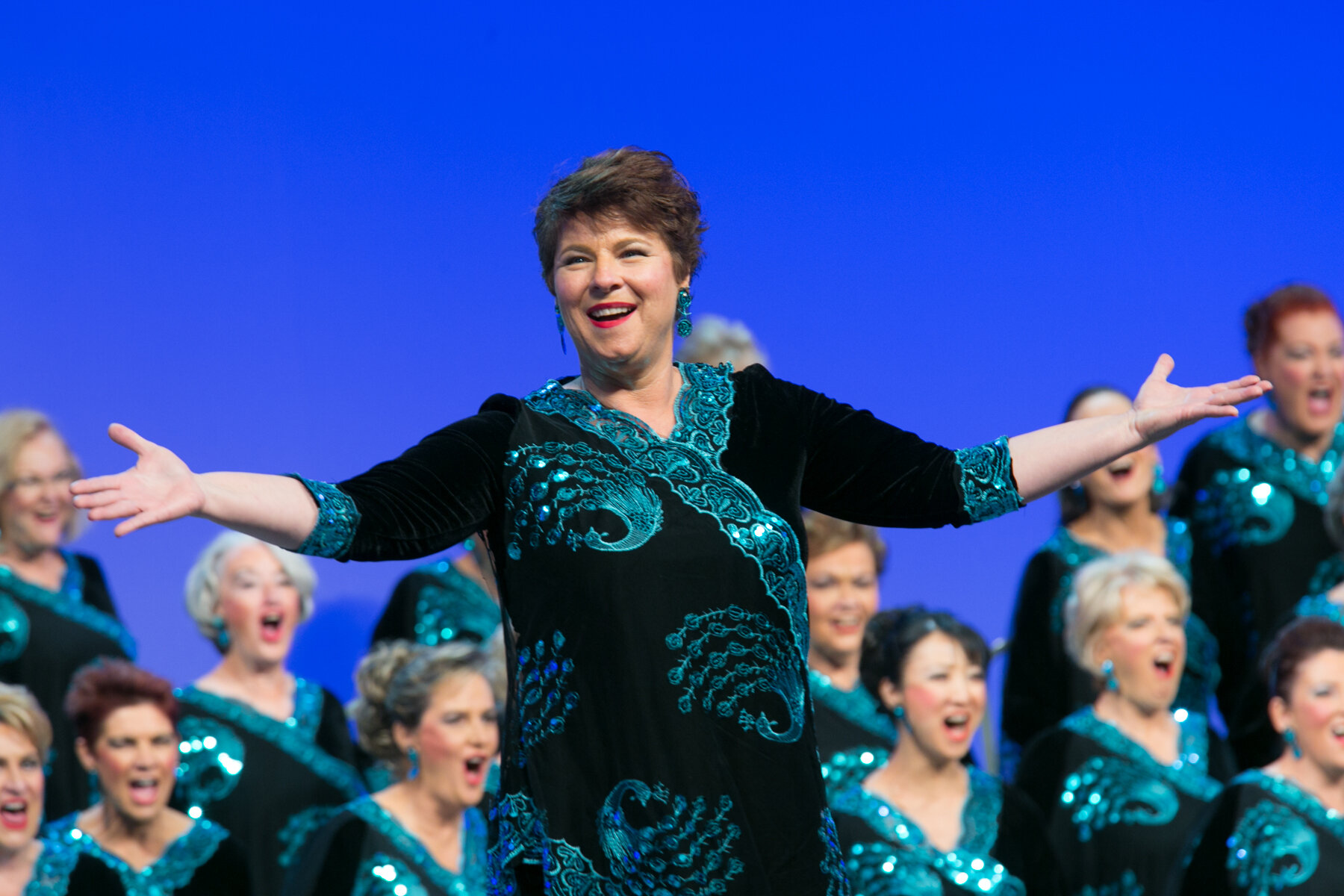
In August 2019, Lea Baker completed a 3-week intensive workshop with the Lessac Institute for Training and Research, at Sydney’s National Institute of Dramatic Art. During the training, Lea, a vocal music instructor and master choral director, was struck with the many ways that Lessac work can be applied to the art of singing. (Read more)
USING LESSAC KINESENSICS WITH SINGERS

In August 2019, Lea Baker completed a 3-week intensive workshop with the Lessac Institute for Training and Research, at Sydney’s National Institute of Dramatic Art. During the training, Lea, a vocal music instructor and master choral director, was struck with the many ways that Lessac work can be applied to the art of singing. She especially likes the way that “Lessac-trained actors are always going for the feeling of singing when they speak.” She saw the potential in applying Lessac’s “feeling process” to the act of singing, so she compiled a list of ways that vocal instructors and directors can use Lessac Kinesensics in their work with students.
Work on the feeling of the sound more than what you are hearing.
Lea sees that her students often are eager to ‘get it right’ in order to please their directors or instructors. So she suggests that vocal teachers avoid having students imitating other singers. Instead, “teach them to know when it’s right by how the sound feels inside their own bodies. Sometimes it helps to remove one kind of sensory input so that students are better able to notice the inside feelings. For example, the use of blindfolds. Or experience singing with eyes your shut sometimes. If we feel it, the audience will hear it.”
Rethink Your Terminology.
Lea appreciates the way Lessac instructors use language, recognizing in standard word choices certain attitudes that are perhaps not useful for the learning process. For instance, Lea notes that many actors and singers use the word, “hit,” to describe how to sing a note or vocalize a consonant. Kinesensic work asks students to “taste” the sound and to “play” consonants like musical instruments that can be enjoyed. So in Lessac’s Consonant Orchestra, the “d-tympany,” for instance, is more beautiful and artful when it is “tapped, not slapped.” Lea also suggests: “Use ‘Explore’ or ‘Experience’ rather than the word, ‘Exercise’. ‘Exercise’ sounds like hard work! To explore, experiment, or experience is to engage in playful journeys of discovery. Which one do you prefer?: ‘We’re now going to do an exercise in vowel sounds,’ or ‘Let’s explore various vowels sounds.’”
Lea points out other common word choices in vocal music that could use some rethinking. The use of “placement” as a term for the voice is widespread in vocal pedagogy, but the term alludes to something fixed or rigid. The Lessac workshop taught her “to consider using, ‘focus the sound forward,’ or ‘think the sound forward.’” This is known in Lessac work as “Forward Facial Orientation,” a gentle movement that involves the flexible action of facial muscles, yawning toward the center of the face. Forward Facial Orientation is also a controllable action, and more attuned to the way the vocal instrument works naturally for optimal sound.
Two things must always be present for optimal vocal production.
The first is that Forward Facial Orientation. The second, according to Lea, is “space between the molars.” This involves an action that is also central to the Lessac vocal work, known as Structural Energy. Structural Energy refers to a yawning space in the mouth and how the facial muscles move with flexibility and awareness to create that space. Lea recommends teaching students “to notice the feeling inside the mouth and throat when yawning and use the ‘pre-yawn’ feeling all the time when singing—keep about a thumb-sized space between the side molars for ALL the open vowels such as OO, AW, AH, OH.” Lea adds that the structure of the common human experience of the yawn, “allows for fuller, richer, and more energetic sound. A sense of ease rather than effort is vital. Strength without strain. Power without pain,” is another Lessac mantra.
The air issue.
Lea finds Lessac principles regarding projection of sound to be extremely useful for vocal instructors. “Many singers force too much air through their vocal chords in an effort to project, when really it is vibrations that add resonance to our sound. Don’t push your air out—instead let it vibrate around the bones and cavities in your face.”
Using natural body wisdom.
Lessac work recognizes that the whole body is involved in optimal sound quality. Lea finds that the body work of Kinesensics offers singers useful and easy instructions for the body’s role in high quality vocal production: “Find the natural instinctive ways the body moves and it will work much more efficiently and effectively in producing tone. The body knows how to breathe. We breathe optimally and instinctively when we are doing something natural and organic, such leaning over, bending, or squatting to smell a beautiful flower in the garden. Recreate that feeling and let your body move into those natural positions regularly to feel that natural inhalation. Then stand upright and maintain that easy, natural breath.” Lessac trainers teach students to feel the 360 degree expansion around the body with each “natural, full inhalation, along with a widening between the shoulder blades. So a relaxed, long, released spine is vital, the crown of the head being the highest point in the body, along with unlocked knees.”
If it feels good, looks good and sounds good, then it’s most likely right!
Arthur Lessac’s metaphor of the human voice as a genuine Stradivarius resonates with Lea: “We are all born with a Stradivarius. We don’t need to purchase a new model or get the current one repaired. We just need to work out how to tune our instrument properly.”
“You will come to realize that spontaneity and control are not opposites, but different chords you can play with the same instrument—your own body, a genuine ‘Stradivarius.’… You do not need to improve upon your Stradivarius. Rather, you want to teach yourself how to keep it in tune, feel its harmony, consonance, melodies, and chords. Once you do, you will begin to appreciate the continuity between your training for exciting, aware performance and every possible situation in which you will need to communicate with the full range of your individuality offstage.”
From Arthur Lessac’s The Use and Training of the Human Voice, (p. 8)

Lessac Institute Membership is a Benefit for Everyone
The Lessac Membership drive begins in November, and as the Institute continues to grow, so too do our offerings to members and our overall membership base. In the past year alone, membership has nearly doubled—due in part to an increase in new Practitioners—resulting in a greater ability to get the work out into worldwide communities supporting both training programs and our workshop trainers. (Read more)
Lessac Institute Membership is a Benefit for Everyone

The Lessac Membership drive begins in November, and as the Institute continues to grow, so too do our offerings to members and our overall membership base. In the past year alone, membership has nearly doubled—due in part to an increase in new Practitioners—resulting in a greater ability to get the work out into worldwide communities supporting both training programs and our workshop trainers.
Membership Director Aimee Blesing (Certified Trainer, Board of Directors) has been working this past year on building more interactive benefits for members. Master Teacher Webinars, updates from the LTRI President, a new Members Only Facebook group, and the soon to be released Master Teacher blog page are the newest additions to membership benefits. All of these benefits aim to help members feel more connected to the LTRI, and to provide them with up-to-date resources for their kinesensic experiences. These new offerings allow members to see that the Institute is working for them, aiming to provide resources that are valuable and tangible, which was Blesing’s main goal when she became Membership Director.
The resources available to members reach beyond simply providing information and a place to connect. Other benefits include peer review of articles and publications, discounted workshops and conferences, research and publishing support, the Lessac Listserve to share information and ask questions, opportunities to present at international and regional conferences, and priority notification of any Lessac publications. For Lessac Practitioners, Certified Trainers, and Master Teachers, membership also provides an up-to-date, comprehensive listing on the LTRI website, as well as voting privileges in LTRI board elections and membership meetings.
For anyone interested in becoming a member of the LTRI, you simply need to visit the website and join. Prices are tiered according to your experience with Lessac work. Individual and Student memberships are available to those who are not Lessac Trainers, while Associate and Professional memberships are aimed at Practitioners, Certified Trainers, and Master Teachers.
The 2019 membership drive starts in November and runs into December, with special offers for joining or renewing during the drive, and discounts for joining or renewing with Conference 2020 registration. With membership being so accessible, and so valuable, there’s really no reason not to join the LTRI or renew your membership this year.
Contact aimee.blesing@lessacinstitute.org or visit https://www.lessacinstitute.org/about-membership for more information.

THE LESSAC INTERNATIONAL CONFERENCE, JANUARY 2020
Our readers are cordially invited to attend the 2020 Lessac Training and Research Institute ® International Conference, which will be held January 9-11, 2020, at Kent State University in Ohio. The conference is for anyone interested in improving the quality of their voice and body communications, and the work can be applied to any life endeavor. (Read more)
THE LESSAC INTERNATIONAL CONFERENCE, JANUARY 2020

Our readers are cordially invited to attend the 2020 Lessac Training and Research Institute ® International Conference, which will be held January 9-11, 2020, at Kent State University in Ohio. The conference is for anyone interested in improving the quality of their voice and body communications, and the work can be applied to any life endeavor. The theme of the conference is: “Reflect and Renew: Lifting Voices to Affect Positive Change,” as we celebrate the power of the human instrument as a conduit for grounded, positive, and peaceful communication. Conference participants will have the opportunity to engage in a wide variety of dynamic, experiential workshops, paper presentations, and panel conversations. Workshops will explore how Lessac energies intersect with various acting techniques, such as Shin Somatics movement, the neuroscience of emotions, and Viola Spolin’s improvisation work, to name a few. One panel discussion will cover how Kinesensics may be used with women in pregnancy, labor, delivery, post-partum, and beyond, to both empower and support them. Among the paper presentations is one that will examine how and why Lessac body energies prepare actors for film, television, and voice-over success. You’ll be given the chance to experience basic lessons in kinesensic energies and principles. The conference environment is also ripe for forging and developing new professional and personal connections.
What presenters are saying about the conference:
Robin Aronson
Certified Trainer
Immediate-Past President, LTRI
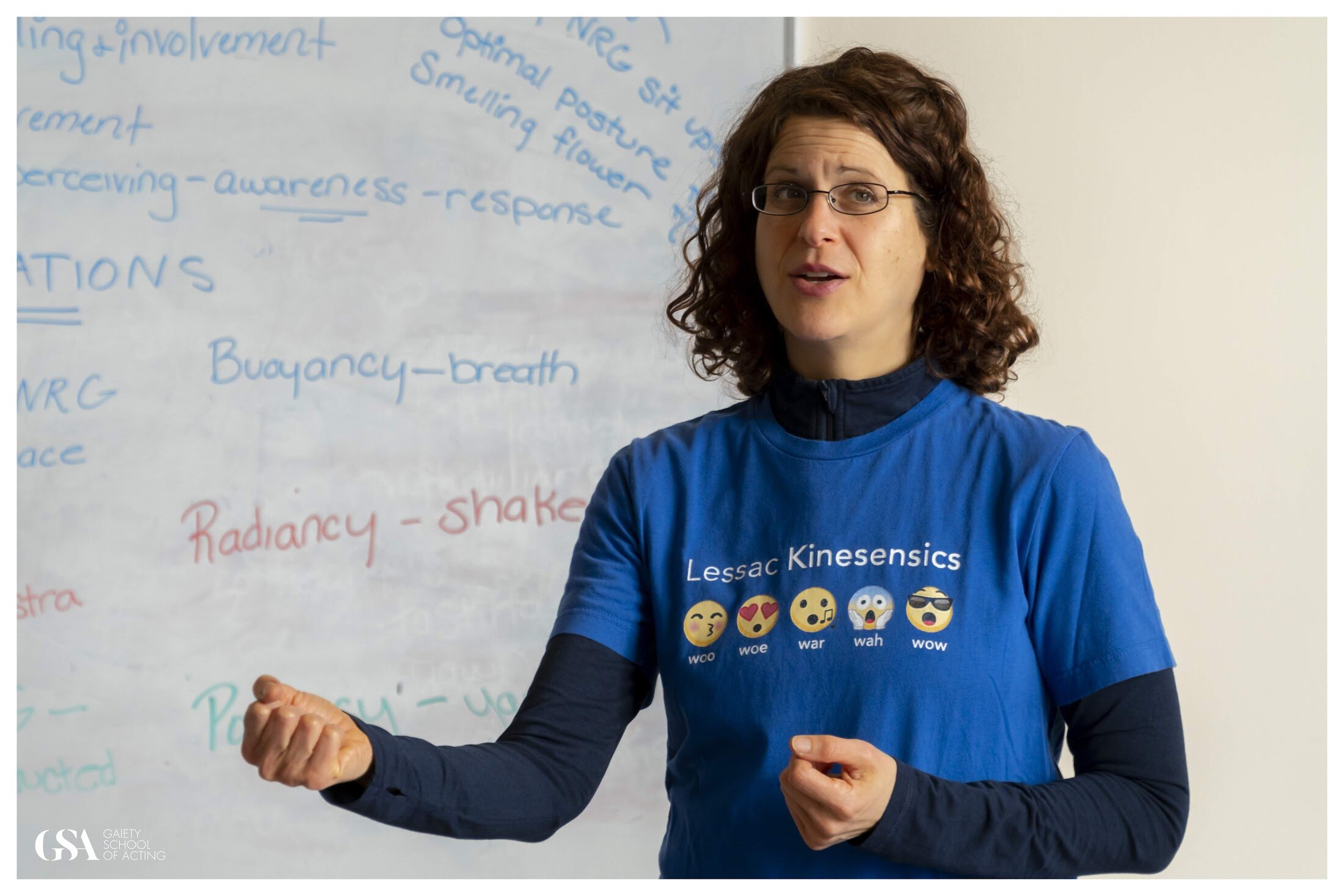
“I am really looking forward to the upcoming 2020 Conference at Kent State. During the conference, I will be co-presenting with my dance colleague, Kelly Ferris Lester from Southern Miss. Our workshop will be exploring the commonalities of Shin Somatics movement work and Lessac Kinsesensic training to enhance and deepen creative expression. In addition to presenting, I also am excited to see others share their current research practices. The Lessac conference is such a lovely way to meet new people interested in the work as well as spending time with Lessac Master Teachers, friends and colleagues. I sincerely hope you will consider attending!”
-Robin Aronson, Immediate Past President LTRI
"The Lessac Conferences have been a font of information for me through the years. Every time I go I pick up valuable Lessac-inspired applications that I have immediately put into use in my direction, classroom, and coaching. The value of this conference cannot be beat; and the intimate, generous community of players in the Lessac world continues to nourish and support anyone interested in any aspect of this holistic training. I want to personally reach out and encourage anyone curious about the work to contact me if you have questions about whether this conference would be right for you to attend this year. crystal.robbins@lessacinstitute.org"
-Crystal Robbins, Master Teacher LRTI
More about the conference:
Kent State University’s School of Theatre and Dance is, in part, hosting the 2020 conference. 2020 marks the 50th year since the tragic events that took place on May 4, 1970 at Kent State University. The university has arranged a variety of special commemorative events available to the public between through May 4, 2020. For more information on the scheduled events, special programs, and educational opportunities, please visit the 50th Commemoration website.

Click here for more information about the conference and registration, please see our website:

ON LESSAC KINESENSICS
What is Lessac Kinesensic Training? A comprehensive, creative, and holistic work aimed at the development of voice and body strength, agility, and expressiveness. Finding the unique and tension-free expression of yourself is what Kinesensics is all about. (Read more)
ON LESSAC KINESENSICS

What is Lessac Kinesensic Training? A comprehensive, creative, and holistic work aimed at the development of voice and body strength, agility, and expressiveness. Finding the unique and tension-free expression of yourself is what Kinesensics is all about. Building on ancient wisdom, backed by modern science, Kinesensics encourages you to use the simple but natural behaviors of your body, such as yawning or humming, as organic instructions towards improved physical and vocal expression and health. Each simple step builds on the previous one, creating a concrete pathway to success. No matter what your line of work, Kinesensics can help you overcome obstacles and release stress and strain to be your authentic self.

Where may I apply the principles of Kinesensics?
Whenever you speak or move, Kinesensics will work for you. Arthur Lessac believed that a little change of mind is all that’s needed to remind us that when we speak, we are singing, and when we walk, we are dancing. We find specific applications of the Work in all of life’s endeavors, from the boardroom to the classroom to the parent reading a child a bedtime story. But the following areas represent ways the work is being used today:
Communication (speech, public speaking, speech language pathology)
Socio-Culture and Language (ESL, second language acquisition, accent acquisition, multi-lingualism)
Education (applied theatre, theatre education, voice & movement development for all ages)
Performance (singing, acting, movement/dance)
Health and wellness (fitness, aging, vitality, self-realization, optimal health)
“So let me invite you into a comprehensive and most accessible … lab, where voice and body training are really communication and language training; where development and exercise, feeling and perception become ‘body wisdom’; and where you learn to deal uniquely with the exploration of originality, not as the discovery of another novelty but as the re-discovery of origin itself…within you.”
Arthur Lessac, from The Use and Training of the Human Voice

Lessac work “is real therapy for voice and body. The more you do it, the better you feel. It’s a boon to anyone: actor, public speaker, singer, vocally impaired, private citizen. Once learned it never deserts you. It’s simple to maintain and only strengthens the voice as you grow older. It’s always there…”
—Frank Langella